PlayStation players are calling a week-long blackout over Sony's 2028 disc cutoff

A group of PlayStation players has called a week without PlayStation. No logins, no sessions, no purchases, from Sunday 23 August to Sunday 30 August, under the tag #PSBlackout.
The trigger is Sony's decision to stop pressing discs for new games in January 2028. The awkward part, for a protest built around that date, is that the disc era for blockbusters ended earlier than 2028 and nobody needed Sony's permission.
The short answer: 23 to 30 August, and it asks for a full week off Sony's platforms
The blackout runs from 19:00 local time on Sunday 23 August 2026 to 19:00 local time on Sunday 30 August 2026. The call is for "no logins, no play sessions, no purchases on any of Sony's platforms" for those seven days.
It was posted on 26 July by Does It Play?, an account known for testing whether physical games actually run without a day-one patch, which is a relevant specialism here. It has been picked up by other creators since.
What Sony actually announced
On 1 July 2026, Sid Shuman, Senior Director of Sony Interactive Entertainment Content Communications, published a short post on the PlayStation Blog confirming that physical disc production for new PlayStation games ends in January 2028. After that, new games arrive "on PlayStation Store and at retailers in digital formats only".
Sony's stated reason is demand: it says the general preference for digital media significantly outpaces physical discs, and that it will prioritise resources to drive innovation in how players access games.
Two things in that post get lost in the anger, and both are true. Games already released, or released before January 2028, are unaffected. And the announcement is about manufacturing new discs, so the discs already in your house keep working on hardware that has a drive. What Sony did not address is what happens to disc drives on future hardware, which is the question underneath most of the worry.
The grievance list is longer than the discs
The organisers were explicit that the disc decision is a final straw rather than the whole complaint. Their statement lists the closure of studios including Bluepoint and Japan Studio, a live-service strategy they call misguided, cancelled fan events, PlayStation VR2 left without support, and dormant franchises like Sly Cooper, SOCOM and Resistance.
Their summary of the mood: "PlayStation has never felt more disconnected from its community", and bringing physical games back "would only be meeting players halfway".
The petition is the bigger number
Running alongside it is a Change.org petition, "Don't Kill the Disc: Tell Sony to Keep Physical PlayStation Games", started on 1 July 2026 by Jade Pearce of PNP Games. It passed 345,000 verified signatures by 27 July, having climbed through 100,000, 165,000 and 213,000 during the month.
Its argument is about ownership rather than nostalgia. A disc is a thing you own, lend, resell and keep. A download code is a licence, and a licence is revocable. The petition also points at everyone downstream of a disc: retailers, distributors, warehousing, the trade-in market, and preservation. Its own line is the clearest summary anyone has managed: "We are not against digital. We are against digital being the only option."
Sony has not publicly responded to the petition or the blackout.
Whether a blackout can work
This particular format is close to the weakest lever available, and that holds even if you agree with the cause.
Not logging in does not cost Sony money in any direct way. PlayStation Network runs on elastic cloud infrastructure that scales with load, so a quieter week is a cheaper week to operate. A PS Plus subscription left untouched still bills. As Insider Gaming pointed out, the petition's roughly 344,000 signatures at the time represented about 0.2% of PlayStation Network's user base, and the blackout week contains no major release to withhold money from, which is the one thing that does register.
The audience is split on it too. A Push Square poll of 2,151 readers found 44% saying they would not take part, 39% saying they would, and 18% undecided.
The counter-argument is that the blackout is not really an economic weapon, it is a visibility one. Petitions and hashtags are how a fragmented audience makes itself countable, and 345,000 signatures in under a month is a real number even at 0.2%. Whether Sony treats it as a signal or as noise is the actual question, and its silence so far is the answer it has chosen.
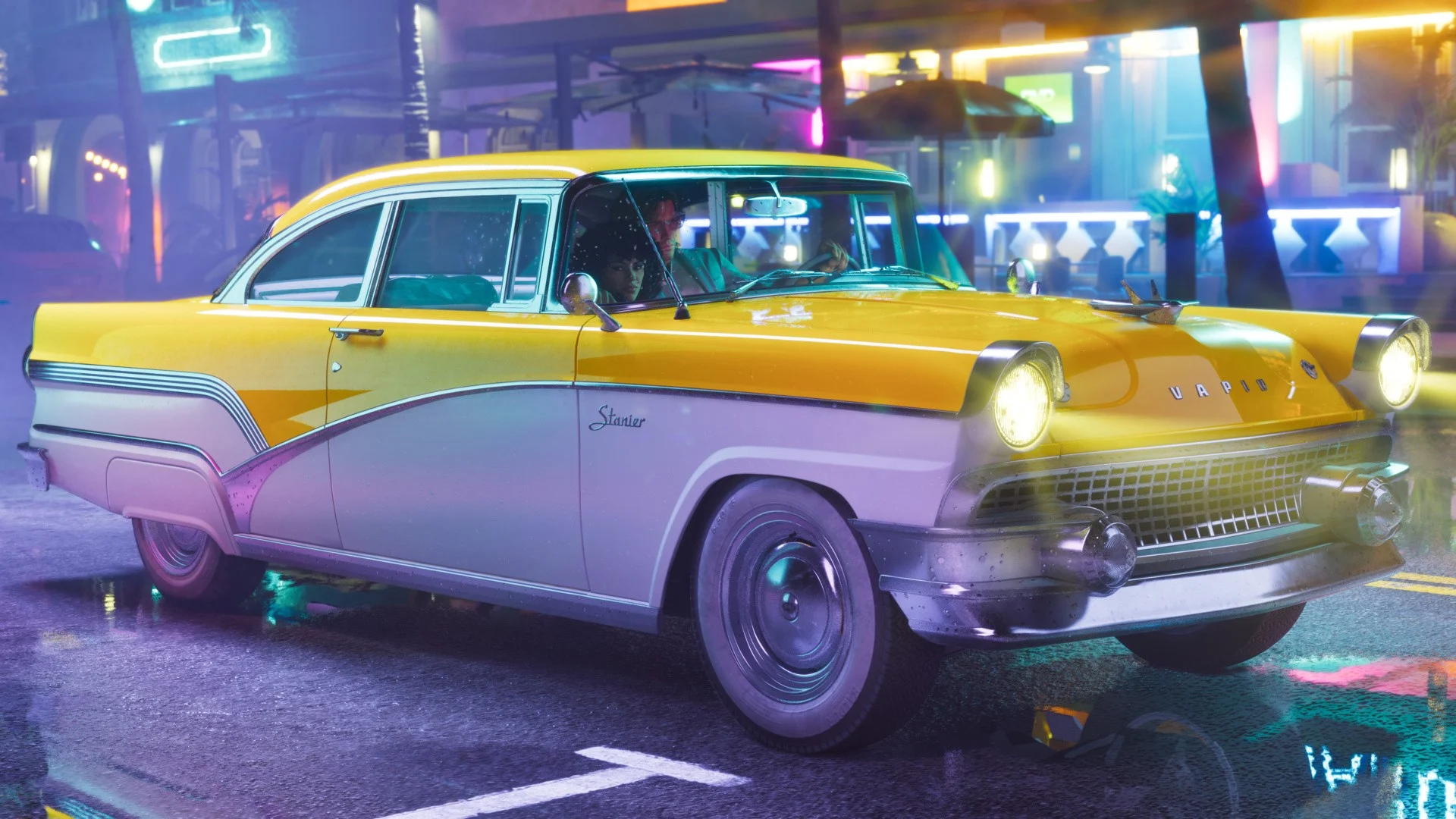
GTA 6 already ended the disc era, and no rule made it
This is the part that reframes the protest.
Sony's cutoff begins in January 2028. GTA 6 launches on 19 November 2026, fourteen months inside the period where pressing a disc is still perfectly allowed. Rockstar chose not to press one. The retail box is a download code and nothing else, on PlayStation 5 and Xbox alike, as we covered when the Standard and Ultimate editions were detailed.
So the biggest release of the generation, on every console it is coming to, already ships the way the protest is trying to prevent, and it does it voluntarily, before any deadline applies. Analyst Mat Piscatella has described the surviving shape of physical as codes in a box plus special editions, which is a description of the GTA 6 box.
The petition's central claim is that a code is a licence somebody else can switch off, while a disc is yours. That stopped being an abstraction this month. In Japan, the code inside the GTA 6 box stops working on 8 May 2027, 170 days after launch, because of how Japanese prepaid-payment rules treat long-lived codes. Same game, same box, and an expiry date printed into the licence.
If you want the argument for physical media in one example, it is not a 2028 policy. It is a boxed copy of the biggest game in the world that becomes unusable in one country six months after release.
What this means if you are buying GTA 6
Nothing about the blackout changes anything you are buying. GTA 6 predates Sony's rule, preorders are open, and the box contains a code whether or not anyone switches their console off in August.
What it does change is how you should think about the boxed edition. It is packaging around a licence, which makes it a poor collectible and a worse resale asset. If you were buying the physical version for the shelf, that reasoning stopped applying in June. If you are buying it because a retailer is cheaper than the store, that still works, and our guides to buying GTA 6 cheaper and to the French import route cover how.
What to watch
- Whether Sony says anything at all before 23 August, having stayed silent through a month of petition growth.
- Whether the blackout produces any measurable dip, and whether anyone can measure it credibly.
- Whether other publishers follow Rockstar to code-in-box before 2028, which would settle the question long before Sony's deadline.
- Whether future PlayStation hardware keeps a disc drive, which is the part Sony has not addressed.
The protest is aimed at a date in 2028. The decision it is protesting was already taken, by a publisher rather than a platform, and it ships in November.